





Your power bank just swelled up. Or maybe a friend's did. Or perhaps you have been reading about the recent massive Anker recalls and you are now side-eyeing the battery brick sitting your backpack.
Whatever brought you here, you are asking the right question: How do you find a truly reliable power bank that is built to last without expanding?
Because the truth is, battery swelling isn't just "random bad luck." It is almost always a consequence of cheap battery swelling cells, weak protection circuits, or poor heat management. Some brands have a far better track record than others when it comes to long-term safety.
We want through user reviews, internal engineering specs, safety certifications, and real-world feedback to put this list together. We'll be honest about the strengths and the shortcomings of every option. And yes, we make one of the power banks on this list, and we will explain exactly why the data proves it belongs at the top.
Why Do Power Banks Swell In The First Place?
(A quick chemistry lesson, because it matters for understanding this list).
Power banks use lithium-ion (Li-ion) or lithium-polymer (Li-Po) battery cells. When those cells degrade, due to extreme heat, overcharging, cheap manufacturing, or poor quality control, the liquid electrolyte inside breaks down and releases gases.
Because the battery is sealed, those gases have nowhere to go. They push outward, resulting in a swollen, puffy, or bloated power bank. This is a sever fire hazard.
The two things that determine whether this happens to your device are:
- Cell Quality: Are the battery cells from a reputable manufacturer (like LG or Panasonic), or from an unverified factory cutting corners on chemical stability?
- Battery Management System (BMS): Does the power bank have a "smart brain" (circuitry) that actively prevents overcharging, overheating, and short circuits?
A cheap power bank lacks both. A premium power bank has both. That is the strict lens we used to build this list.
🛑 Don't risk another swollen battery.
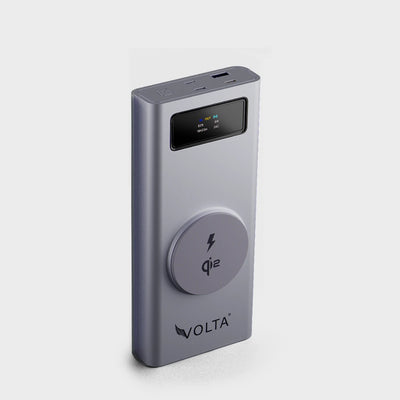
Upgrade to the VoltaGo MAX 27,000mAh. Built with aircraft-grade aluminum for superior cooling and an advanced BMS, it’s engineered to last 850+ charge cycles safely.
The 7 Power Banks Least Likely to Swell
#1 VoltaGo MAX (27,000mAh) by Volta Charger
Best Overall | Safest Thermal Design
We aren't going to hide the fact that this is our product. But we put it at number one because we set out to build the ultimate safe power bank to solve the swelling problem that plagues the industry. The VoltaGo Max is built around high-efficiency cells that boast an 850+ cycle lifecycle, nearly triple the industry average.
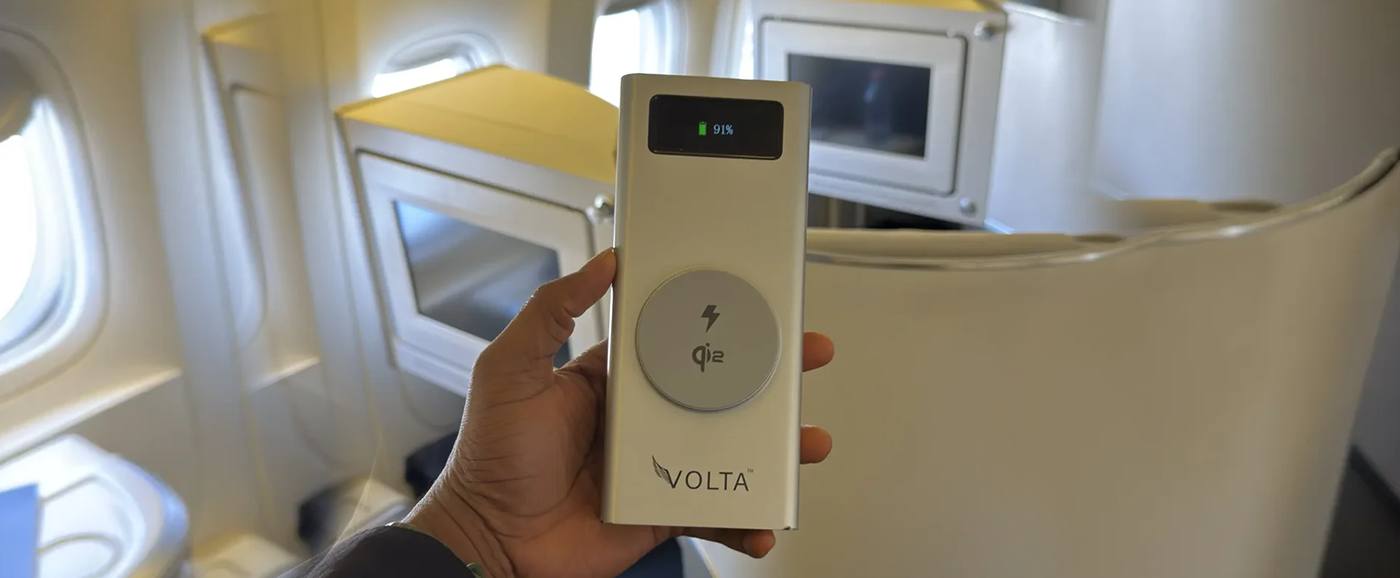
But the real magic is the exterior and the BMS. Unlike 90% of power banks that use heat-trapping plastic shells, the VoltaGo MAX uses an aircraft-grade aluminum casing. Aluminum naturally dissipates heat, acting as a giant heatsink to keep the internal temperature low during high-wattage (140W) charging.
The Smart BMS Actively Manages:
- Overcharge protection: It physically stops accepting a charge the millisecond it hits 100%.
- Temperature regulation: It constantly monitors thermal output and throttles speed if things get too warm.
- Short-circuit protection: Prevents sudden current spikes from faulty wall outlets.
- Smart power distribution: Regulates voltage perfectly per port.
- Pros: Unmatched heat dissipation (aluminum body), 140W high-speed output, OLED data screen, 850+ cycle life.
- Cons: Heavier than plastic alternatives, premium price point.

VoltaGo MAX - 27,000 mAh
€164,72 €259,45
Save €94,7327,000 mAh Airline-Safe Portable Power Bank VOLTAGO Max is a singular power system that will work with just about any device you own. Made to ...
#2 Anker 737 PowerCore 24K
Best High-Capacity Alternative (With Caveats)
Anker is a massive name in the space, and the 737 is a powerhouse with a solid BMS. It delivers excellent wattage and features a smart digital display to track your power draw.
However, we must mention safety context: Anker faced significant recalls in 2024 and 2025 due to overheating and fire risks in other models (like the A1642 and A1647). While the 737 was not part of that recall, it still utilizes a heavy plastic chassis, which simply does not shed heat as effectively as metal during maximum-wattage laptop charging.
- Pros: Great brand recognition, clear digital display, strong power output.
- Cons: Plastic housing traps heat; brand history of recent thermal recalls.
#3 Baseus Blade 100W (20,000mAh)
Best for Ultra-Thin Portability
The Baseus Blade is famous for its laptop-like, flat design. It easily slips into a messenger bag right next to your MacBook. It offers a solid 100W output and standard overcharge protections.
The downside to being "ultra-thin" is physics. Thin devices have less space for internal airflow and thermal expansion. While the BMS is safe, long-term users have reported the casing warping slightly after 18-24 months of heavy, daily use due to concentrated heat.
- Pros: Incredibly slim profile, lightweight, decent 100W output.
- Cons: Thermal management is hampered by the thin design; potential for long-term warping.
#4 Mophie Powerstation XXL (20,000mAh)
Best Conservative Design for iPhone Users
Mophie has been a trusted brand in the Apple ecosystem for over a decade. They build their devices very conservatively. The Mophie Powerstation XXL rarely swells because it intentionally charges at a much slower rate (usually capped at 18W or 20W). Slower charging generates significantly less heat.
- Pros: Extremely reliable, fabric wrap design is nice, very low heat generation.
- Cons: 18W max output is much too slow for laptops or fast-charging modern smartphones.
#5 Zendure SuperTank Pro (26,800mAh)
Best Alternative Battery Chemistry
Zendure takes a different approach by utilizing semi-solid electrolyte battery technology (in some of their higher-end models) or highly optimized traditional cells. Semi-solid cells are inherently more stable than standard liquid Li-ion cells, which significantly lowers risk of gas expansion and swelling.
- Pros: Excellent battery stability, great OLED screen, 100W output.
- Cons: Very expensive, bulky, and can be difficult to find in stock.
#6 RavPower Pioneer 130W (20,000mAh)
Solid Build, Tricky Availability
RavPower makes fantastic internal hardware. Their Pioneer series uses high-quality cells and a very strict BMS that effectively manages voltage to prevent overcharging. Historically, they were a go-to recommendation for safe, heavy-duty power.
- Pros: Reliable BMS, good power-to-weight ratio.
- Cons: The brand was removed from Amazon a few years ago for review violations, making them harder to purchase and get warranty support for.
#7 INIU Portable Charger BI-B41 (20,000mAh)
Best Budget Emergency Backup
If you just need a cheap power bank for a weekend trip and aren't using it every day, INIU is the best of the "budget" tier. Unlike unbranded knock-offs, INIU actually maintains real safety certifications (CE, FCC) and uses a functional BMS.
- Pros: Very affordable, paw-print LED indicator is cute, lightweight.
- Cons: Cheap plastic build, cells will degrade much faster than premium brands, not suited for high-wattage devices.
How To Choose a Safe Power Bank: What To Actually Look For
If you decide to shop outside this list, do not buy a power bank without verifying these engineering benchmarks:
1. Certifications to Look For:
- CE / FCC: This is the bare minimum. It proves the device complies with standard electromagnetic safety regulations.
- UN38.3: This is critical. It means the battery has passed rigorous international transport safety testing (altitude, thermal, vibration, and shock).
- RoHS: Ensures the restriction of hazardous, unstable materials in the circuitry.
2. Specs That Indicate Lower Risk:
- 800+ Charge Cycles: The industry average is 300-500 cycles. A rating of 800+ means the internal chemistry is highly stable and degrades much slower.
- Aluminum Casing: Plastic acts like a winter coat for batteries. Aluminum acts like an ice pack, pulling heat away from the cells and dispersing it into the air.
- Active Thermal Management: Look for specs that explicitly state the charger monitors temperature and automatically slows down the charge if it gets too hot.
Conclusion
Battery swelling is 100% preventable through good engineering. If you are looking for a safe power bank that meets the highest standards of safety, you need a device that prioritizes thermal management and premium cell chemistry.
Stop wasting money on cheap tech that poses a fire hazard, and invest in a reliable power bank like the VoltaGo MAX that gives you absolute peace of mind.
Ready for a power bank you can actually trust?
Stop worrying about plastic chargers expanding in your bag. Get the aluminum-clad VoltaGo MAX today.
Important Safety Note: If your current power bank is already swollen, stop using it immediately. Do not attempt to charge it, and do not throw it in the regular trash. Take it to a designated hazardous e-waste recycling center.

VoltaGo MAX - 27,000 mAh
27,000 mAh Airline-Safe Portable Power Bank VOLTAGO Max is a singular power system that will work with just about any...



Leave a comment
This site is protected by hCaptcha and the hCaptcha Privacy Policy and Terms of Service apply.