



Battery anxiety is a modern epidemic. Whether you are in the middle of a crucial Zoom call at an airport, navigating a remote hiking trail, or working from a coffee shop with no available outlets, watching your battery indicator turn red is a sinking feeling.
While standard portable chargers are great for a quick phone top-up, the modern digital lifestyle demands more. Enter the high-capacity power bank.
This guide breaks down exactly why a high-capacity power bank is a non-negotiable tool for remote workers, travelers, and tech enthusiasts, how to spot the "fake capacity" marketing myths, and how to choose the perfect model for your everyday carry.

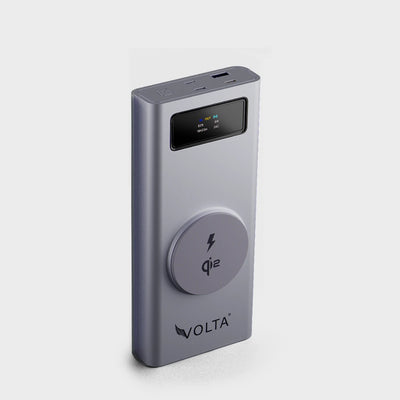
VoltaGo MAX – 27.000 mAh
€162,95 €255,95
Save €93,0027.000 mAh flugtaugliche tragbare Powerbank VOLTAGO Max ist ein einzigartiges Stromversorgungssystem, das mit nahezu allen Ihren Geräten kompatibel ist. Es wurde entwickelt, um Ihre Geräte ...
What Qualifies as a "High-Capacity" Power Bank?
In the tech industry, a power bank is generally considered "high-capacity" when it holds 20,000mAh or more of electrical energy.
To put that into perspective:
- 5,000mAh: A lipstick-sized emergency charger (about 1 phone charge).
- 10,000mAh: A standard daily commuter bank (1.5 to 2 phone charges).
- 20,00mAh - 30,000mAh+ (High-Capacity): A portable powerhouse capable of charging a smartphone 5+ times, fully recharging a tablet, or keeping a power-hungry laptop alive for hours.
5 Undeniable Reasons You Need a High-Capacity Power Bank
If you are still carrying around a tiny, aging portable charger, here is why upgrading to a high-capacity model will completely change how you travel and work.
1. Powering the "Multi-Device" Ecosystem

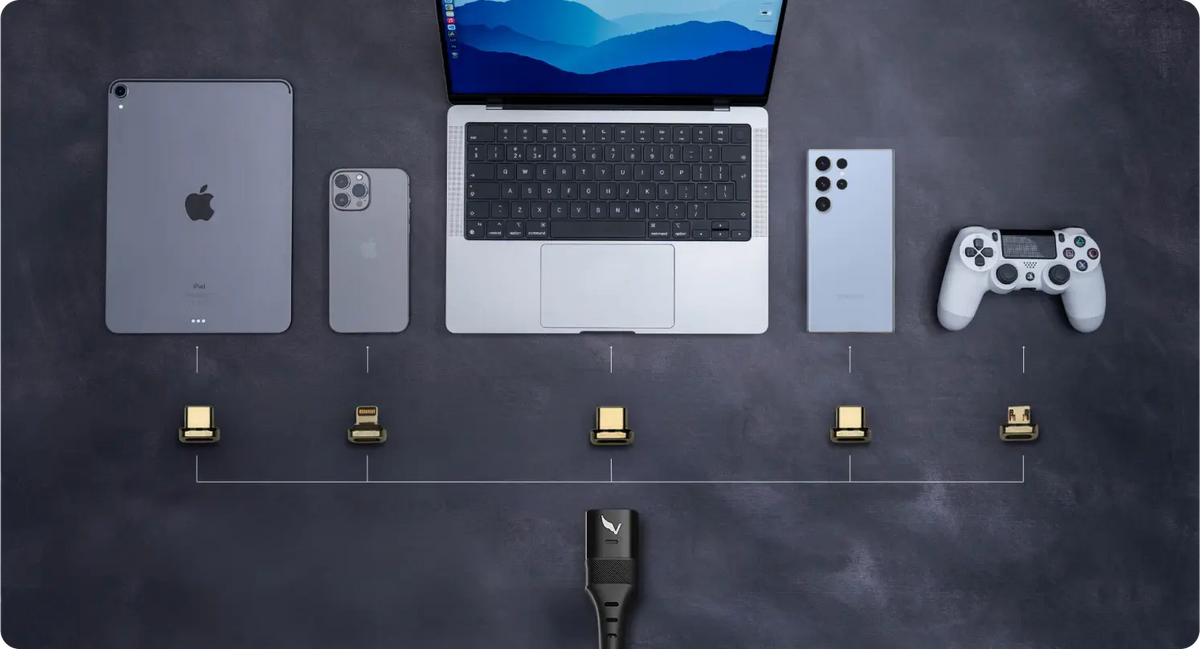
Gone are the days when we just carried a phone. Today, a standard backpack might contain a smartphone, wireless earbuds, a smartwatch, a tablet, and a laptop. High-capacity power banks feature multiple output ports (often a mix of USB-C and USB-A), allowing you to charge 3 or 4 devices simultaneously without the battery draining in minutes.
2. True Laptop Charging via Power Delivery (PD)

Small power banks output between 15W and 20W, barely enough to slowly charge a phone. High-capacity models are equipped with advanced USB-C Power Delivery (PD), pushing anywhere from 60W up to a massive 140W (PD 3.1). This means you can fast-charge a 16-inch MacBook Pro or Dell XPS at the exact same speed as a premium wall outlet.
3. Off-Grid Reliability for Days, Not Hours

If you are camping, attending a multi-day music festival, or facing a power outage at home, a 27,000mAh power bank provides immense peace of mind. It acts as a miniature generator that can keep your vital communication and navigation devices alive for nearly a week of conservative use.
4. Pass-Through Charging as a Workspace Hub
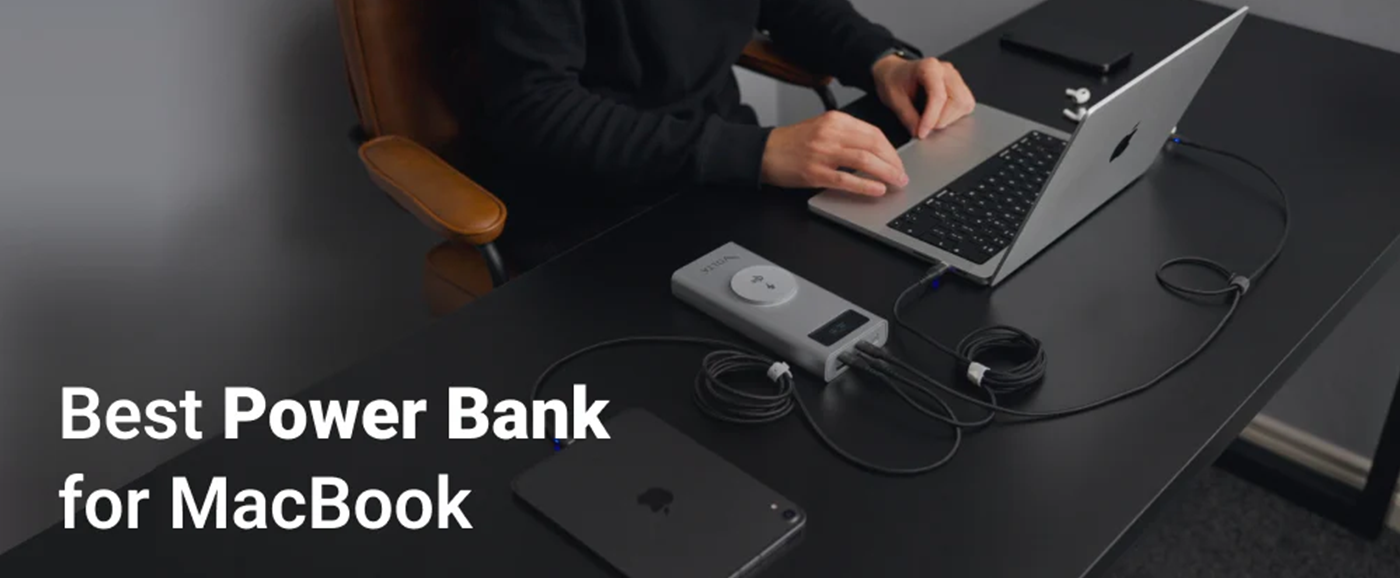
Premium high-capacity power banks like the VoltaGo Max support pass-through charging. This means you can plug the power bank into a wall outlet, and then plug your laptop and phone into the power bank. It will intelligently push power to your devices first, and then charge its own internal battery. It effectively replaces a multi-port wall charger in your travel bag.
5. Cost and Weight Efficiency

Buying one 27,000mAh power bank is cheaper, more space-efficient, and easier to manage than carrying three separate 10,000mAh batteries. You only have one device to remember to recharge before a trip.
The Reality Check: The "Capacity Myth" Explained
This is not a scam; it is physics.
Power banks store energy in lithium-ion cells at a nominal voltage of 3.7 Volts. However, USB ports output power at 5 Volts (or 9V/15V/20V for fast charging). When the power bank converts that 3.7V energy to 5V to push it into your phone, energy is lost in the conversion process (usually as heat).
The Golden Rule of Power Banks: You will realistically get about 65% to 70% of the advertised capacity in actual, usable charge.
- Advertised: 20,00mAh
- Real-World Usable Output: ~13,500mAh
When buying, always factor in this conversion loss to ensure you are getting enough power for your specific laptop or phone.
Choosing the Right Size: A Quick Comparison

Travel Rules: Can You Take High-Capacity Power Banks on a Plane?


The FAA, TSA, and European aviation authorities have strict rules regarding lithium-ion batteries. They measure limits in Watt-Hours (Wh), not mAh.
The 100Wh Limit: You can bring any power bank up to 100Wh on a plane without asking for permission, but it MUST be in your carry-on luggage. It cannot go in the cargo hold.
The Airline Sweet Spot: To maximize your power while staying legally compliant to fly, look for power banks around the 26,00mAh to 27,00mAh mark. These are specifically engineered by brands to hit exactly 99Wh. The legal limit for hassle-free travel.
Over 100Wh: Power banks between 101Wh and 160Wh require special airline approval before you fly. Anything over 160Wh is strictly prohibited.
Key Features to Look For When Buying
When you are ready to invest, don't just look at the capacity. Check the specifications for these critical features:
- High Wattage Output (PD): If you want to charge a laptop, ensure the USB-C port outputs at least 65W (preferably 100W or 140W).
- High Wattage Input: A massive battery takes forever to recharge if the input is slow. Look for models that can recharge at 65W or higher. A premium 27,00mAh power bank should recharge fully in about 1.5 hours, not 12 hours.
- Smart Digital Displays: Skip the basic 4-dot LED lights. High-end models now feature OLED screens showing exact battery percentage, time-to-recharge, and the real-time wattage output of each port.
- Safety Certifications: Lithium batteries hold massive amounts of energy. Ensure the device has MultiProtect safety systems, NTC temperature monitoring, and protections against overcharging and short circuits.
Frequently Asked Questions (FAQs)
How long does a high-capacity power bank take to charge?
It depends entirely on the input wattage. A 20,000mAh power bank charging on a standard 10W phone plug can take up to 10 hours. However, if the power bank supports 65W fast input and you use a laptop wall charger, it can fully recharge in just 2 to 3 hours.
Is a 30,000mAh power bank better than a 20,000mAh one?
Not necessarily; it depends on your use case. A 30,000mAh bank holds more power, but it is significantly heavier, bulkier, and usually banned from commercial flights. A 20,000mAh or 27,000mAh model is often the "sweet spot" for portability and power.
Will a high-capacity power bank damage my small phone battery?
No. Modern power banks contain smart microchips that communicate with the device you plug in. If you plug a 20W iPhone into a 140W power bank port, the power bank will only deliver the 20W the phone asks for, ensuring total safety.

VoltaGo MAX – 27.000 mAh
27.000 mAh flugtaugliche tragbare Powerbank VOLTAGO Max ist ein einzigartiges Stromversorgungssystem, das mit nahe...


Hinterlasse einen Kommentar
Diese Website ist durch hCaptcha geschützt und es gelten die allgemeinen Geschäftsbedingungen und Datenschutzbestimmungen von hCaptcha.