





If your phone charger has ever become unusually hot, sparked, or made a popping sound, you've probably wondered if it could explode. While genuine phone chargers rarely fail without warning, damaged or poor-quality chargers can become a safety risk. In this guide, we'll explain what really causes charger failures, the warning signs to watch for, and how to charge your devices safely.
The Short Answer
Yes, but it's extremely rare. Most phone chargers don't explode on their own. When failures happen, they're usually caused by overheating, physical damage, poor-quality components, counterfeit chargers, or electrical faults rather than the act of charging itself.
- Phone chargers rarely explode without warning
- Heat is a bigger warning sign than charging itself
- Damaged or counterfeit chargers carry the highest risk
- Replace chargers that smell, spark, or overheat
What Actually Happens When a Charger "Explodes"?
When people hear that a phone charger has "exploded," they often imagine a dramatic blast. In reality, that's rarely what happens.
Most charger failures happen gradually and show warning signs before they become dangerous. Instead of a large explosion, you're more likely to experience one or more of the following:
- Smoke: Internal components overheat and begin to burn, producing visible smoke.
- Sparks: A short circuit or damaged wiring ca create sparks when the charger is plugged in or unplugged.
- Popping Sounds: A loud pop may occur if an internal component, such as a capacitor, fails suddenly.
- Melted Plastic: Excessive heat can soften or melt the charger's casing or connector.
-
Small Electrical Fires: In rare cases, overheating or faulty components can ignite nearby flammable materials.
While these incidents are uncommon, they should never be ignored. If your charger starts smoking, sparking, making unusual noises, or feels excessively hot, unplug it safely, stop using it immediately, and replace it with a high-quality, certified charger.
Why Phone Chargers Fail
Several factors contribute to charger malfunctions, from poor manufacturing to improper usage. Here’s a breakdown of the most common causes:
1. Low-Quality or Counterfeit Chargers
The biggest culprit behind charger explosions is poor build quality. Many cheap chargers don’t adhere to safety standards, lacking proper insulation, heat dissipation, or overload protection. While they may look like legitimate brands, counterfeit chargers use substandard materials that can overheat, short-circuit, and catch fire.
How to Avoid It:
- Always buy chargers from reputable brands or directly from the manufacturer.
- Look for safety certifications (UL, CE, FCC) on the packaging.
- Be wary of chargers that feel unusually light or have misspelled labels—these are common red flags for counterfeits.
2. Overheating from Continuous Use
Chargers naturally generate heat while in use, but excessive heat buildup is dangerous. Leaving your charger plugged in 24/7, even when not in use, increases the risk of overheating. The components inside can degrade over time, leading to failures that may cause sparks or even fire.
How to Avoid It:
- Unplug your charger when it's not in use.
- Avoid using your phone while it’s charging, as this increases heat output.
- Keep chargers away from direct sunlight or heat sources.
3. Power Surges and Electrical Faults
A sudden voltage spike from unstable power grids or lightning can overwhelm a charger, causing it to short-circuit or overheat. This is especially risky for chargers without built-in surge protection.
How to Avoid It:
- Use surge protectors when charging in unstable power environments.
- Avoid charging during storms or power fluctuations.
- Consider a charger with built-in safety mechanisms to regulate voltage.
4. Frayed or Damaged Charging Cables
A worn-out or damaged charging cable can cause short circuits. Exposed wires increase the risk of electric shocks, overheating, and even combustion.
How to Avoid It:
- Replace frayed or bent cables immediately.
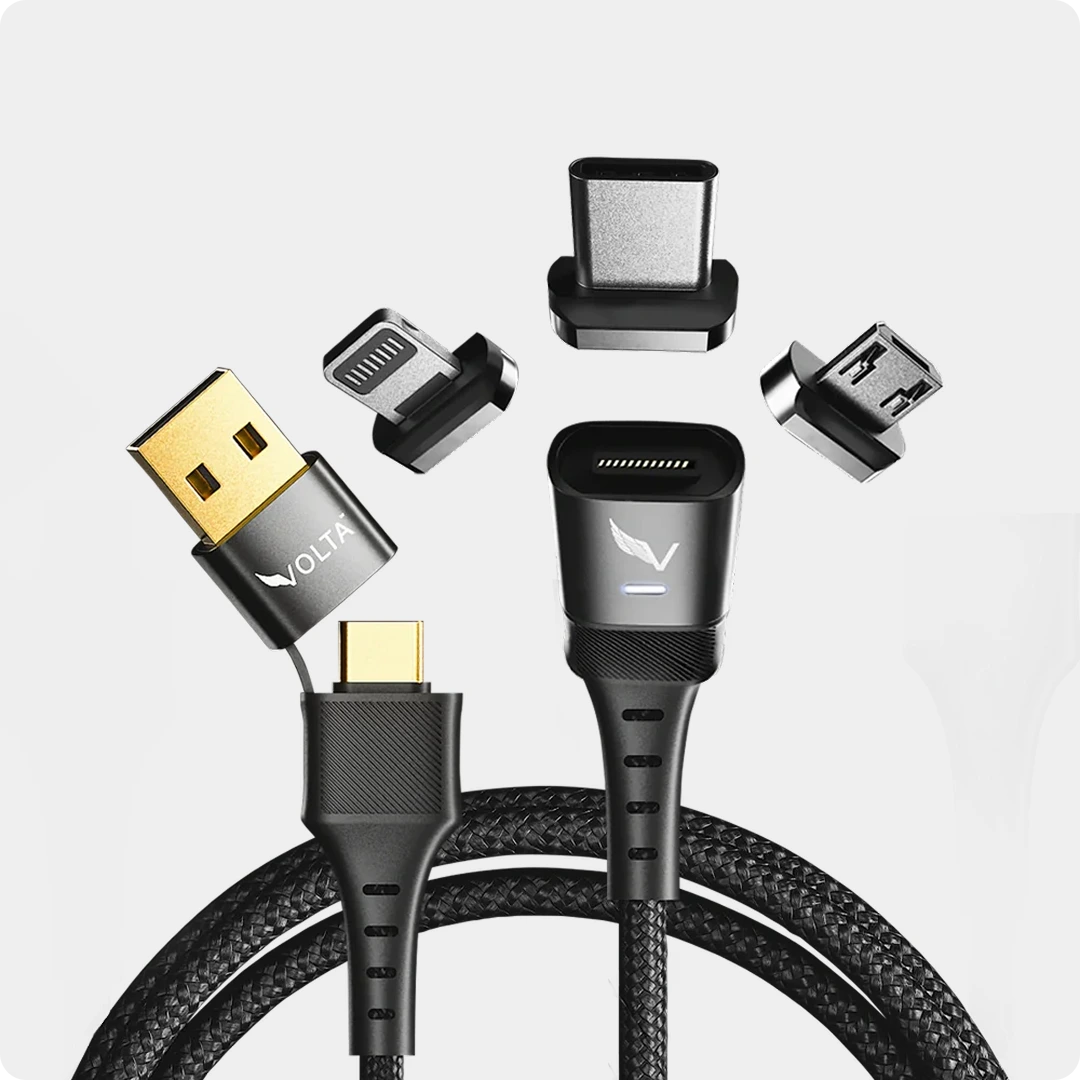
- Use magnetic cables like the Volta Max, which reduce wear and tear by eliminating constant plugging and unplugging.
- Store cables properly—don’t wrap them too tightly or bend them sharply.

Volta MAX Cable
$50.00
✅ Easy Magnetic Connection ✅ Snap to Charge Your Phone, Laptop, and More ✅ Charges ALL Apple Lightning, USB-C & Micro USB Devices ✅ Supports ...
5. Overcharging and Poor Battery Health
Some older chargers don’t stop supplying power once the battery is full, which can lead to excessive heat buildup. While modern phones have safety mechanisms like optimized charging, a faulty charger can still override these protections and damage the battery.
How to Avoid It:
- Use chargers that support fast yet safe charging, like the VoltaGo Max Power Bank, which intelligently regulates power delivery.
- Avoid charging overnight unless your phone has adaptive charging enabled.
- Stick to manufacturer-recommended charging accessories.

7 Warning Signs Your Charger Is About to Fail
Signs include:
- Burning smell
- Charger becomes too hot to touch
- Sparks when plugging in
- Frayed cable
- Buzzing sounds
- Loose connector
- Melted plastic
What To Do If Your Charger Starts Smoking or Sparking
Simple steps:
- Unplug it safely.
- Stop using it immediately.
- Let it cool before touching it.
- Dispose of it properly.
- Replace it with a certified charger.
The Safest Way to Charge Your Phone
While phone chargers exploding isn’t a daily occurrence, the risk is real enough that choosing safe, high-quality accessories matters. Investing in well-built, USB-IF-certified chargers and cables can prevent overheating and electrical failures.
If you want a durable, safe, and fast-charging solution, products like the Volta Max Cable and VoltaGo Max Power Bank are designed to protect against surges, overheating, and wear-and-tear damage. They ensure your phone gets the power it needs—without the risks.
Frequently Asked Questions (FAQ)
1. Can fast charging cause my phone charger to explode?
No, fast charging itself does not cause explosions. However, low-quality fast chargers that lack proper heat management and safety protocols can overheat and become a fire hazard. Using a certified fast charger, like the Volta Max, ensures safe power delivery.
2. Is it safe to leave my phone charging overnight?
Modern smartphones have adaptive charging features that slow down charging once the battery reaches a certain level. However, using cheap chargers without safety mechanisms increases the risk of overheating. If you charge overnight, use a reliable charger and keep your phone on a hard, heat-resistant surface.
3. Why does my charger get hot while charging?
Some warmth is normal, but if your charger gets too hot to touch, it may be overloaded, damaged, or of poor quality. Unplug it immediately and consider replacing it with a safer alternative.
4. Can a damaged charging cable cause my charger to explode?
Yes, a frayed or exposed charging cable can short-circuit and cause sparks, which might lead to overheating or even a fire. Always replace damaged cables with high-quality ones, such as the Volta Max, which is built for durability.
5. What should I do if my charger starts smoking or sparking?
Unplug it immediately and remove it from any flammable materials. If it’s safe to do so, dispose of it properly and replace it with a certified charger.
6. Do expensive chargers really last longer and perform better?
Price isn’t always a guarantee of quality, but cheap, unbranded chargers are far more likely to fail or become hazardous. Investing in well-engineered products like the Volta Max ensures better performance and long-term safety.
Conclusion
Exploding phone chargers are often the result of poor-quality products, overheating, or electrical surges. By choosing the right accessories, following safe charging habits, and replacing worn-out cables, you can significantly reduce the risk of a charger mishap. After all, charging your phone should be a simple, worry-free process—not a fire hazard.


Leave a comment
This site is protected by hCaptcha and the hCaptcha Privacy Policy and Terms of Service apply.