





What Is a Travel Adapter?
At a Glance
- A travel adapter changes the shape of your plug.
- It does not change voltage.
- Most modern phone and laptop chargers already support worldwide voltage.
- Check your charger's input rating before you travel.
- A universal travel adapter works in most countries.
Why Travel Adapters Matter
✈️ Short on Time? Meet the Ultimate Travel Powerhouse.

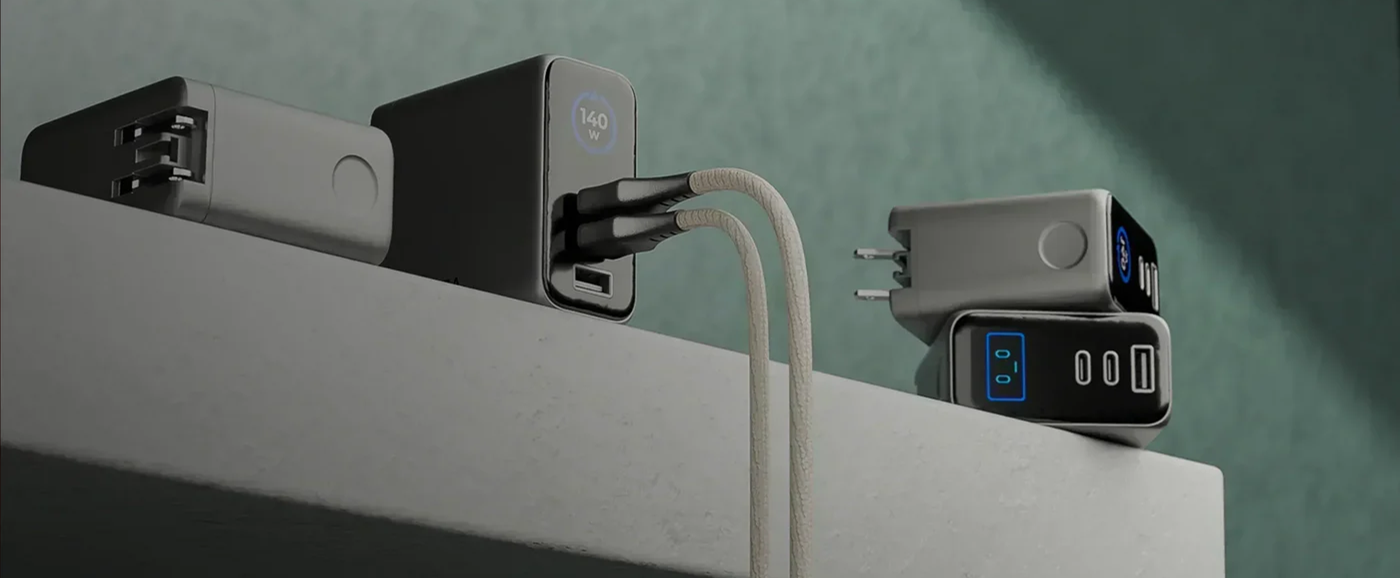
140W Giga GaN Charger
$111.00
140W 3-Port GaN Charger - the mini charger with mighty power. Charge via two USB Type-C® and one through USB Type-A. Perfect for charging smartphones, ...
How Does a Travel Adapter Work?
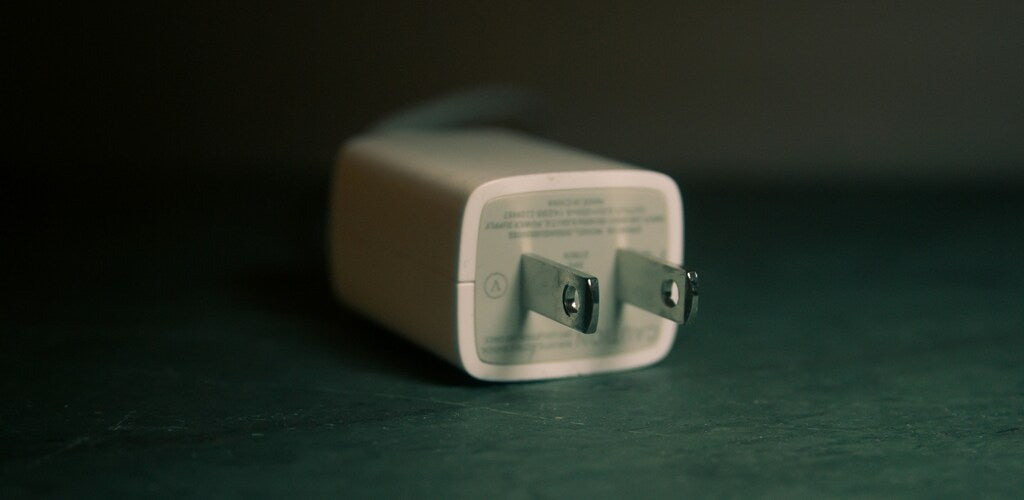
A travel adapter works by changing the shape of your plug so it fits the electrical outlets used in another country. Inside the adapter are metal contacts that connect your charger's plug to the local socket, allowing electricity to flow safely to your device.
It's important to remember that a travel adapter does not change the voltage supplied by the outlet. If your destination uses a different voltage than your device supports, you'll also need a voltage converter or a charger that's compatible with worldwide voltages (typically labelled 100–240V).
For most modern smartphones, tablets, laptops, cameras, and USB chargers, a travel adapter is all that's needed because their power adapters are already designed to work with different voltages around the world.
Do Travel Adapters Convert Voltage?
No. A travel adapter only changes the shape of your plug so it fits a different country's power outlet. It does not change the electrical voltage coming from the wall.
If your device only supports one voltage (for example, 120V only) and you're travelling to a country that uses 220–240V electricity, you'll need a voltage converter in addition to the correct travel adapter. However, most modern phone, tablet, laptop, and USB chargers already support a wide input range of 100–240V, meaning you'll usually only need a travel adapter when travelling internationally.
| Feature | Travel Adapter | Voltage Converter |
|---|---|---|
| Changes plug shape | Yes | No |
| Changes electrical voltage | No | Yes |
| Used for phones & laptops | Usually | Usually not needed |
| Used for hair dryers & older appliances | Not enough on its own | Often required |
| Best for | Plug compatibility | Voltage compatibility |
Quick Tip
Before you travel, check the label on your charger. If the input says 100–240V, it's designed to work with different voltages around the world. In most cases, you'll only need a travel adapter not a voltage converter.
Example
Imagine you're travelling from the United States to France.
Your phone charger is labelled Input: 100–240V, so it can safely handle France's 230V electricity. The only problem is that your US plug won't fit the French wall outlet. In this case, you only need a travel adapter.
Now imagine you're taking an older hair dryer that's only designed for 120V. Plugging it directly into a 230V outlet even with a travel adapter could damage the appliance. In that situation, you'd need both a travel adapter and a voltage converter.
Do I Need a Travel Adapter?
If you're travelling to a country that uses a different type of electrical outlet than your home country, you'll almost certainly need a travel adapter. A travel adapter allows your charger or appliance plug to fit securely into the local power socket.
However, needing a travel adapter doesn't necessarily mean you need a voltage converter. Most modern phone chargers, laptop chargers, tablets, cameras, and other USB-powered devices already support a wide input range of 100–240V, meaning they only require the correct plug adapter to work safely overseas.
Before you travel, check your charger's label. If it says Input: 100–240V, a travel adapter is usually all you need. If it only supports a single voltage, you'll also need a compatible voltage converter.
| Device | Travel Adapter Needed? | Voltage Converter Needed? |
|---|---|---|
| Smartphone | Usually | No |
| Laptop | Usually | No |
| Tablet | Usually | No |
| Camera Battery Charger | Usually | No |
| USB Charger | Usually | No |
| Hair Dryer (120V only) | Yes | Yes |
| Curling Iron (120V only) | Yes | Yes |
| Electric Kettle | Yes | Sometimes |
| Electric Toothbrush | Usually | Check Manufacturer |
How to Check if Your Charger Works Worldwide
Turn your charger over and look for the input voltage printed on the label.
If you see Input: 100–240V, 50/60Hz, your charger is designed to work in most countries around the world. In that case, you'll only need the correct travel adapter to fit the local power outlet.
If the label only shows a single voltage, such as 120V or 230V, you'll need to check whether your destination uses the same voltage. If it doesn't, you'll also need a suitable voltage converter.
What Type of Travel Adapter Do I Need?
The type of travel adapter you need depends entirely on the country you're visiting. Different countries use different plug shapes, so the adapter that works in Europe may not work in the United Kingdom, Australia, or South Africa.
Before you travel, check which plug type your destination uses. If you're visiting multiple countries on the same trip, a universal travel adapter is often the most convenient option.
Common Travel Adapter Types Around the World
| Destination | Common Plug Type | Travel Adapter Needed? |
|---|---|---|
| United States | Type A & B | Depends on your home country |
| Canada | Type A & B | Depends |
| Europe (most countries) | Type C, E & F | Usually Yes |
| United Kingdom | Type G | Usually Yes |
| Australia & New Zealand | Type I | Usually Yes |
| Japan | Type A | Depends |
| China | Type A, C & I | Usually Yes |
| India | Type C, D & M | Usually Yes |
| South Africa | Type M, N & C | Usually Yes |
| United Arab Emirates | Type G | Usually Yes |

Should You Buy a Universal Travel Adapter?
If you regularly travel to different countries, a universal travel adapter is usually the best choice. Instead of carrying several individual adapters, a universal adapter combines multiple plug types into a single compact device, making it easier to stay powered wherever you go.
For occasional trips to a single destination, a country-specific adapter can also work well. However, if you travel frequently for work or leisure, a high-quality universal travel adapter offers greater convenience and helps reduce the number of accessories you need to pack.
Country-Specific vs Universal Travel Adapter
| Country-Specific Adapter | Universal Travel Adapter |
|---|---|
| Designed for one destination | Works in multiple countries |
| Usually smaller | More versatile |
| Lower cost | Better for frequent travellers |
| Best for one-off trips | Best for international travel |
If your itinerary includes multiple countries, check whether they use different plug types before you leave. For example, while much of continental Europe uses Type C, the United Kingdom uses Type G, meaning the same adapter won't work in both places.
Are Travel Adapters Safe?
Yes, a quality travel adapter is generally very safe when used correctly. The biggest safety risks usually come from poorly made adapters, counterfeit products, overloading the adapter, or using it as a substitute for a voltage converter when one is actually required.
A travel adapter simply connects your device to a different style of wall outlet. It doesn't increase power or force extra electricity into your device. As long as your charger supports the local voltage and you're using a well-built adapter, charging your phone, laptop, tablet, or camera is generally safe.
What Makes a Travel Adapter Safe?
Look for these features
| Feature | Why It Matters |
|---|---|
| Safety certifications (CE, UKCA, UL where applicable) | Indicates the adapter has been tested against recognized safety standards. |
| Built-in fuse | Helps protect against excessive current during electrical faults. |
| Flame-retardant housing | Reduces the risk of melting if the adapter overheats. |
| Child safety shutters | Helps prevent accidental contact with live electrical parts. |
| Secure fit | Prevents loose connections that can generate heat or sparks. |
Are Universal Travel Adapters Safe?
Yes, provided they're manufactured to recognized safety standards and used within their rated power limits. A good universal travel adapter should lock securely into place, fit outlets firmly, and clearly display its maximum power rating.
Avoid adapters that feel loose, become unusually hot during normal use, or lack any visible safety certification. While inexpensive adapters may look similar, build quality and internal safety features can vary significantly.
Common Travel Adapter Mistakes (And How to Avoid Them)
Even experienced travelers make simple charging mistakes that can leave devices uncharged or worse, permanently damaged. Fortunately, most of these problems are easy to avoid once you understand how travel adapters and electrical systems work.
Mistake #1
Assuming a Travel Adapter Changes Voltage
A travel adapter only changes the shape of your plug, it does not change the voltage coming from the wall outlet. If your appliance only supports one voltage and you are travelling to a country with a different electrical system, you'll also need a voltage converter.
Mistake #2
Not Checking Your Charger's Input Voltage
Before you travel, take a few seconds to check the label on your charger. If it says Input: 100–240V, it's designed for international use and usually only requires the correct travel adapter. If it only supports a single voltage, using it overseas without a converter could damage the device.
Mistake #3
Buying the Cheapest Adapter You Can Find
Not all travel adapters are built to the same standard. Poorly made adapters may have loose connections, weak internal components, or lack recognized safety certifications. Spending a little more on a quality adapter can provide a more reliable connection and greater peace of mind while travelling.
Mistake #4
Overloading a Single Adapter
Many universal travel adapters include multiple USB ports, making it tempting to charge several devices at once. While this is usually fine within the adapter's power rating, connecting too many high-power devices at the same time can reduce charging performance or exceed the adapter's limits. Always check the maximum output specified by the manufacturer.
Mistake #5
Assuming Every Country Uses the Same Plug
Europe alone uses several different plug standards, and countries like the United Kingdom use an entirely different socket from most of mainland Europe. Always confirm the plug type used at your destination before you travel.
Mistake #6
Packing an Adapter but Forgetting the Right Charging Cable
A travel adapter only connects you to the wall outlet. You'll still need the correct charging cable for your phone, tablet, laptop, or other devices. Packing a reliable USB-C cable and charger can help you avoid unnecessary charging problems while travelling.
Quick Safety Checklist
- Check your charger supports 100–240V.
- Use the correct plug for your destination.
- Don't overload the adapter.
- Never use a damaged adapter.
- Buy adapters from reputable brands.
- Keep adapters dry.
- Unplug the adapter when not in use.
If you're buying a travel adapter with built-in USB charging ports, consider one that uses GaN (Gallium Nitride) technology. GaN chargers are more efficient than traditional silicon chargers, generating less heat while delivering high power in a smaller size. Lower operating temperatures can contribute to improved efficiency and make compact travel chargers more practical for frequent travel.
Did You Know?
Most modern smartphones, tablets, laptops, cameras and USB chargers already support worldwide voltage. In many cases, the only thing preventing them from working abroad is the shape of the wall socket not the electricity itself.
Meet the GIGA GaN Charger : An Ultra-Versatile, Comprehensive 140W Charger for Home, Work and Travel

Charge Multiple Devices Simultaneously At Full Speed :

Full Speed Charging:
Effortless, Worldwide Compatibility:

Pocket-Sized Powerhouse:

Embrace Existing Cables:
Conclusion

Travel Adapter FAQs
Can a Travel Adapter Convert Voltage?
No. A travel adapter only changes the shape of your plug so it fits a different wall outlet. If your device doesn't support your destination's voltage, you'll also need a voltage converter.
How Do I Know If I Need a Travel Adapter?
If your destination uses a different plug type than your home country, you'll need a travel adapter. Check your destination's outlet type before you travel.
How Do I Know If I Need a Voltage Converter?
Check the input rating printed on your charger or appliance. If it says 100–240V, you'll usually only need a travel adapter. If it only supports one voltage (such as 120V), you may also need a voltage converter.
What Wattage Travel Adapter Do I Need?
Travel adapters don't increase or decrease wattage—they simply allow your plug to fit another country's outlet. Instead, choose an adapter with a power rating high enough for the devices you plan to use.
Can a Travel Adapter Fast Charge My Phone?
Yes, provided both your charger and your travel adapter support the required power output. The adapter itself doesn't make charging faster; it simply provides the connection to the wall outlet.
Are Universal Travel Adapters Safe?
Yes, provided they're well-built, certified, and used within their rated power limits. Avoid poorly made adapters that lack recognized safety certifications or feel loose when plugged into an outlet.
How Do I Use a Travel Adapter?
Insert the correct plug configuration for your destination, plug the adapter into the wall outlet, and then connect your charger or device. If your charger supports the local voltage, you're ready to charge safely.
Can I Charge Multiple Devices at Once?
Yes, if your travel adapter includes multiple USB ports and its total power output is sufficient for the connected devices. Always stay within the manufacturer's maximum power rating.
Are Travel Adapters Allowed on Planes?
Yes. Travel adapters are generally allowed in both carry-on and checked baggage. If your adapter includes a built-in battery or power bank, check your airline's rules, as lithium batteries usually need to be packed in carry-on luggage.
What's the Difference Between a Travel Adapter and a Voltage Converter?
A travel adapter changes the shape of your plug so it fits another country's outlet. A voltage converter changes the electrical voltage supplied by the outlet for devices that aren't designed for international voltages.
Do Travel Adapters Work in Every Country?
No. Some adapters are designed for a single region, while universal travel adapters work across many countries. Always check that your adapter supports the plug types used at your destination.
Can I Leave My Travel Adapter Plugged In?
Yes, although it's good practice to unplug it when it's not in use, especially in hotels or shared accommodation. This reduces unnecessary power consumption and minimizes wear on the adapter.


Leave a comment
This site is protected by hCaptcha and the hCaptcha Privacy Policy and Terms of Service apply.