





Technology moves fast. Cables, however, are one of those things we often overlook, until they stop working or fail to deliver the performance we expect. Over the past decade, one connector has quietly replaced almost everything else: USB-C.
From charging smartphones to powering laptops and even running 4K displays, USB-C has become the modern standard. But how did it get here, what makes it better than older ports, and what should you watch out for when choosing a USB-C cable like the Volta Max

Volta MAX Cable
$50.00
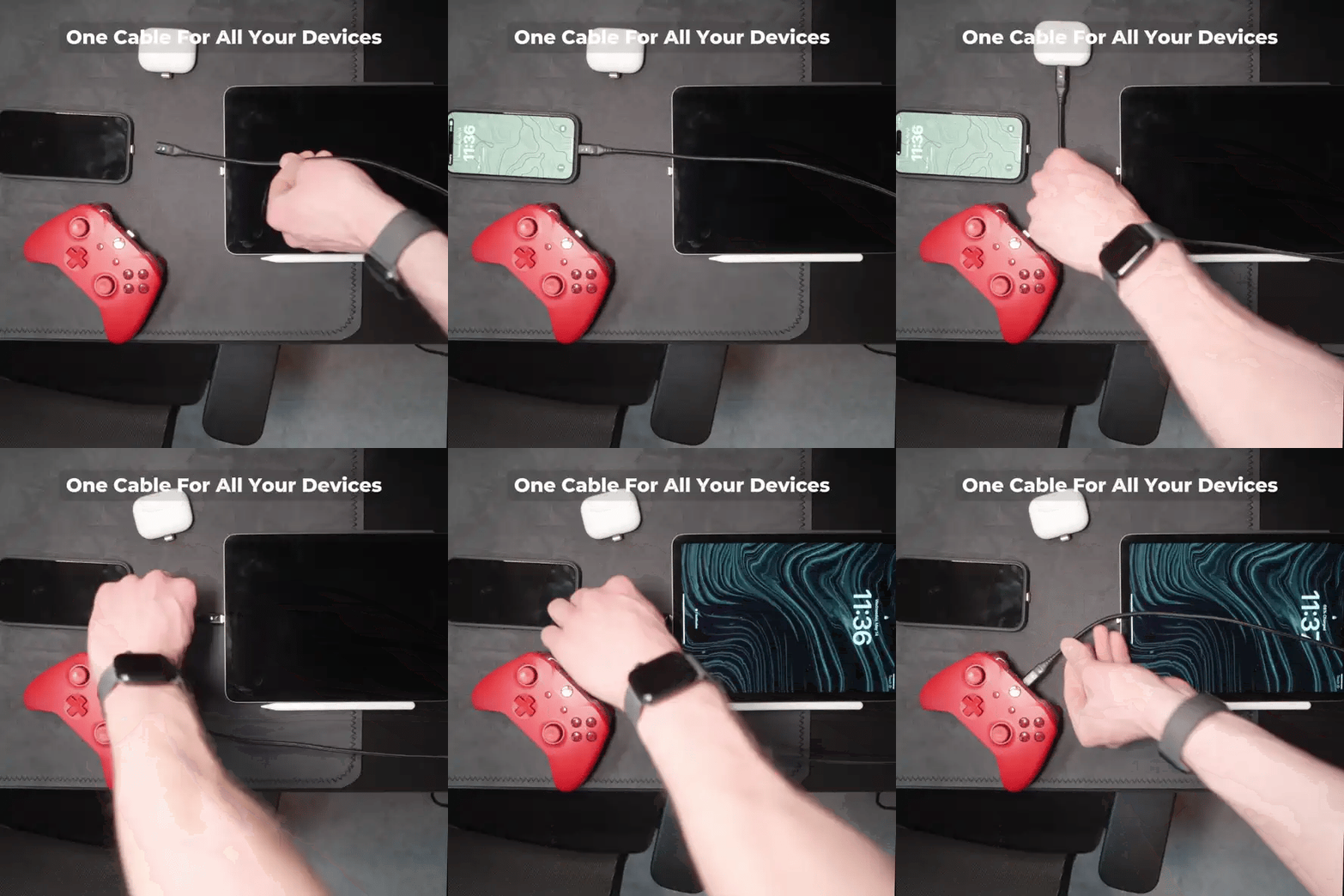
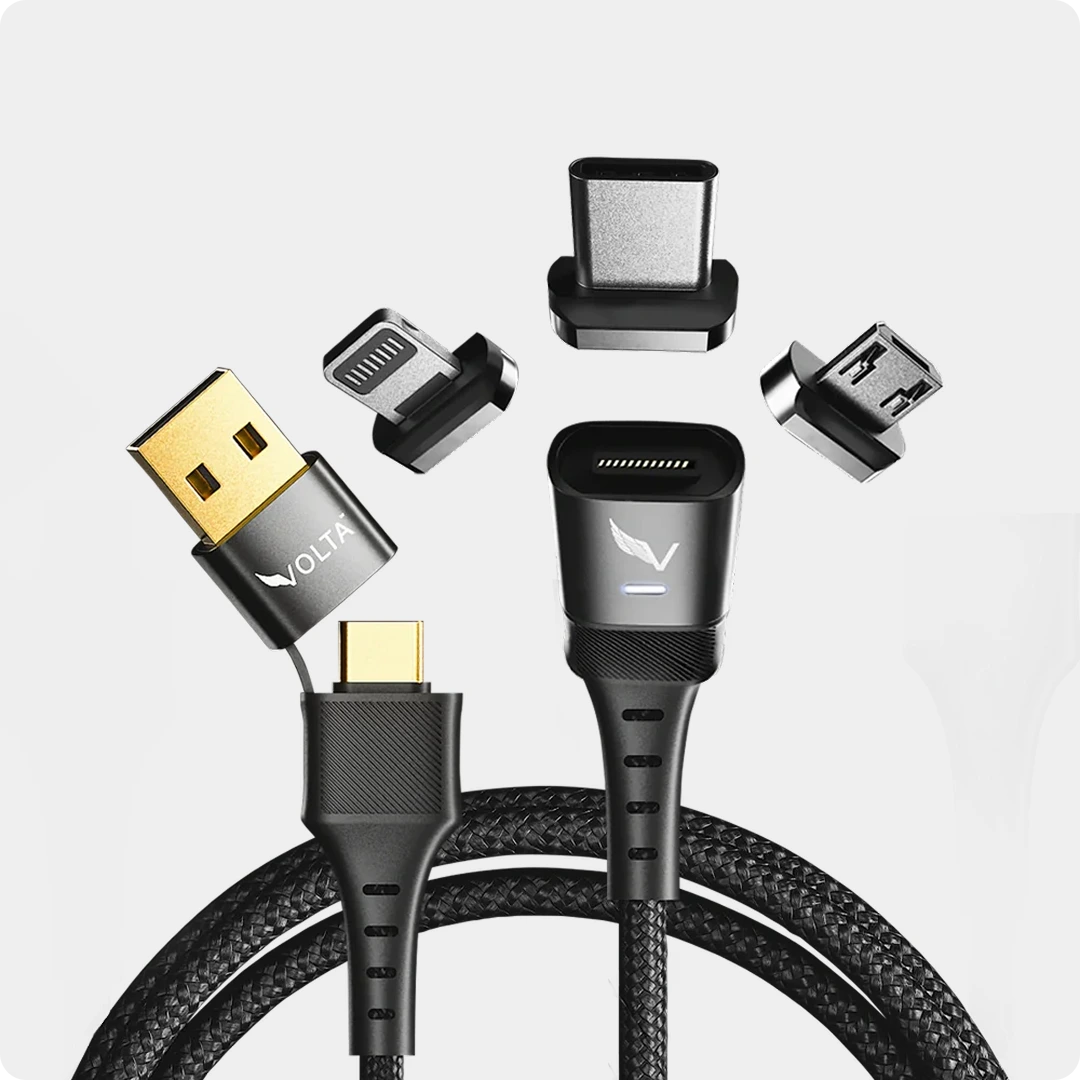
✅ Easy Magnetic Connection ✅ Snap to Charge Your Phone, Laptop, and More ✅ Charges ALL Apple Lightning, USB-C & Micro USB Devices ✅ Supports ...
1. What Exactly Is USB-C?
USB-C (also called USB Type-C) is a universal connector standard introduced in 2014. Unlike older USB-A or micro-USB ports, USB-C was designed to be:
- Reversible: no more flipping the plug the wrong way
- Universal: one connector charging, data, video, and audio.
- Future-proof: capable of handling increasing speeds and power over time.
Today, USB-C is used across phones, tablets, laptops, monitors, cameras, headphones, and even gaming consoles.
2. A Quick History of USB-C
- 1996: The first USB standard (USB 1.0) was introduced, with speeds of just 12 Mbps.
- 2000s: USB-A became the default connector on PCs and laptops, while micro-USB dominated smartphones.
- 2014: USB-C was announced by the USB Implementers Forum (USB-IF).
- 2015: Apple adopted USB-C on its MacBook, sparking mainstream attention.
- 2020s: Nearly all Android flagships, most laptops, and accessories have shifted to USB-C.
- 2024 onward: Even Apple's iPhone 15 now ships with USB-C, signaling the end of proprietary Lightning cables.
3. Why USB-C Became the Standard
Here is why USB-C has effectively replaced older connectors:
- Faster charging: USB-C supports USB Power Delivery (PD), which scales from 18W up to 240W, enough to charge everything from earbuds to gaming laptops.
- High-speed data transfer: Depending on the version (USB 3.2, USB4, Thunderbolt 3/4, speeds can reach up to 40 Gbps.
- Video output: USB-C can carry DisplayPort or HDMI signals, meaning a single cable can connect a laptop to a 4K or even 8K monitor.
- Durability: Unlike fragile micro-USB, USB-C connectors are sturdier and rated for thousands of insertions.
- One cable for all: Instead of juggling multiple chargers, USB-C brings true universality.
4. The Hidden Risks of USB-C Cables
Not all USB-C cables are created equal. Because the standard is so versatile, cheap or poorly made cables can cause:
- Overheating and device damage: Low-quality cables may lack resistors that regulate current.
- Data bottlenecks: Some cables only handle charging, not high-speed data or video.
- Electronic noise: Poor shielding can interfere with signals, affecting performance.
- Short lifespan: Connectors and braiding on cheaper cables often wear out quickly.
⚠️ The Problem with Standard USB-C: Constant Plug Friction .
While USB-C is powerful, constantly plugging and unplugging a rigid cable physically grinds down your device’s delicate internal charging port over time. Once that port loosens, your expensive phone or laptop is bricked. The Volta MAX Magnetic Cable fixes the fatal flaw of USB-C. By leaving a tiny, dust-proof magnetic tip inside your device, the cable snaps on effortlessly without physical friction.
That is why USB-IF certification (a compliance standard for USB devices) is important when choosing a cable like the Volta Max that gives you all the versatility of the USB-C cable and the convenience of other USB types.

5. What to Look for in a Good USB-C Cable
When shopping for a reliable cable, keep these factors in mind:
- Power capacity: Does it support the wattage your device needs (e.g., 100W or 240W)?
- Data transfer speeds: If you move large files or connect to monitors, look for USB 3.2 or Thunderbolt support.
- Durability: Braided exteriors and magnetic connectors can extend a cable's lifespan.
- Compatibility: A universal cable that works with Lightning, Micro-USB, and USB-C saves clutter.
- Certification: Check if the cable follows USB-IF standards for safety.
6. A Smarter Take on USB-C: The Rise of Magnetic Universal Cables
One of the biggest pain points with USB-C isn't the connector itself but the wear and tear from daily plugging in and out. That is where magnetic universal cables have become popular.
Instead of forcing the cable in and out, a small magnetic tip stays in your device, and the cable snaps on and off magnetically. This helps with:
- Preventing port damage over time.
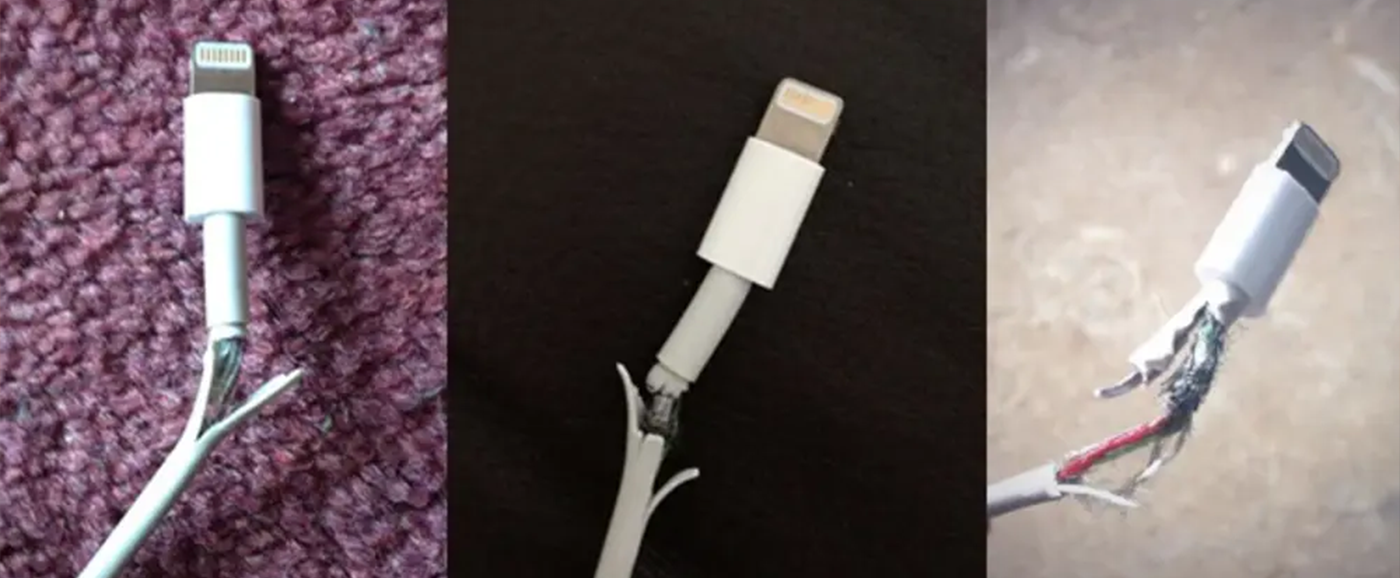
- Reducing frayed ends and broken connectors.
- Making charging more convenient, especially in the dark or on the go.
7. Where the Volta Max Cable Fits In
If you are looking for a reliable USB-C solutions that avoids the pitfalls of generic cables, the Volta Max is worth noting.

Unlike many cheap magnetic USB-C cables, Volta Max is built to USB-IF standards, with:
- 240W power capacity: enough for the most demanding laptops.
- USB 3.2 + Thunderbolt support: 20 Gbps data transfer and 4K display capability.
- Universal 6-in-1 tips: works with USB-C, Micro-USB, and Lightning devices.
- Built-in safety resistors: protecting your devices from power surges.
- Durable magnetic design: reducing wear on your ports and extending cable life.
It is not about replacing USB-C, but about making USB-C smarter and safer for all your devices.
8. The Future of USB-C
Looking ahead, USB-C will likely remain the universal connector for the next decade. With the EU mandating USB-C for phones and gadgets, and charging standards climbing past 240W, the industry is all-in.
Expect to see:
- More laptops and consoles powered exclusively by USB-C.
- Higher-wattage adapters that push the 240W limit.
- Expanded use in accessories like cameras, displays, and networking.
- Better cable labeling. The USB-IF has begun enforcing clearer icons so users know exactly what each cable supports.
Conclusion
USB-C is more than just another port, it is the backbone of modern connectivity. It powers our devices, moves our data, and keeps our digital lives running smoothly. But with versatility comes responsibility: the wrong cable can limit performance or even damage your devices.
For those who want the safest and most future-proof experience, investing in a high-quality option like the Volta Max Cable ensures you are ready for today's fast-charging, high-speed world and whatever comes next.
Frequently Asked Questions
Why do some USB-C cables charge so slowly?
Not all USB-C cables carry the same power. Cheap cables lack the internal "e-Mark" microchip required to safely negotiate high-wattage Power Delivery (PD), capping your charging speed at a slow crawl.
Can a bad USB-C cable ruin my phone or laptop?
Yes. Poorly manufactured USB-C cables lack the mandatory 56kΩ pull-up resistor. Without it, the cable can accidentally pull too much current from a power brick, permanently frying your device's motherboard.
What is the difference between USB-C and Thunderbolt?
They look identical, but Thunderbolt (3 and 4) is a premium, supercharged version of USB-C. Thunderbolt allows for blindingly fast data speeds (up to 40Gbps) and dual 4K video outputs, while basic USB-C cables usually only handle slower data and charging.
Are magnetic USB-C cables safe for data transfer?
Most cheap magnetic cables only support slow charging. However, premium designs like the Volta MAX feature specialized multi-pin layouts that fully support high-speed data transfer and 4K video displays without data loss.

Volta MAX Cable
✅ Easy Magnetic Connection ✅ Snap to Charge Your Phone, Laptop, and More ✅ Charges ALL Apple Lightning, USB-C & ...



Napsat komentář
Tento web je chráněn službou hCaptcha a vztahují se na něj Zásady ochrany osobních údajů a Podmínky služby společnosti hCaptcha.